Proposals & Quotes
Estimate vs. Proposal: What's the Difference and When to Use Each
Julius
|December 2, 2025|5 min read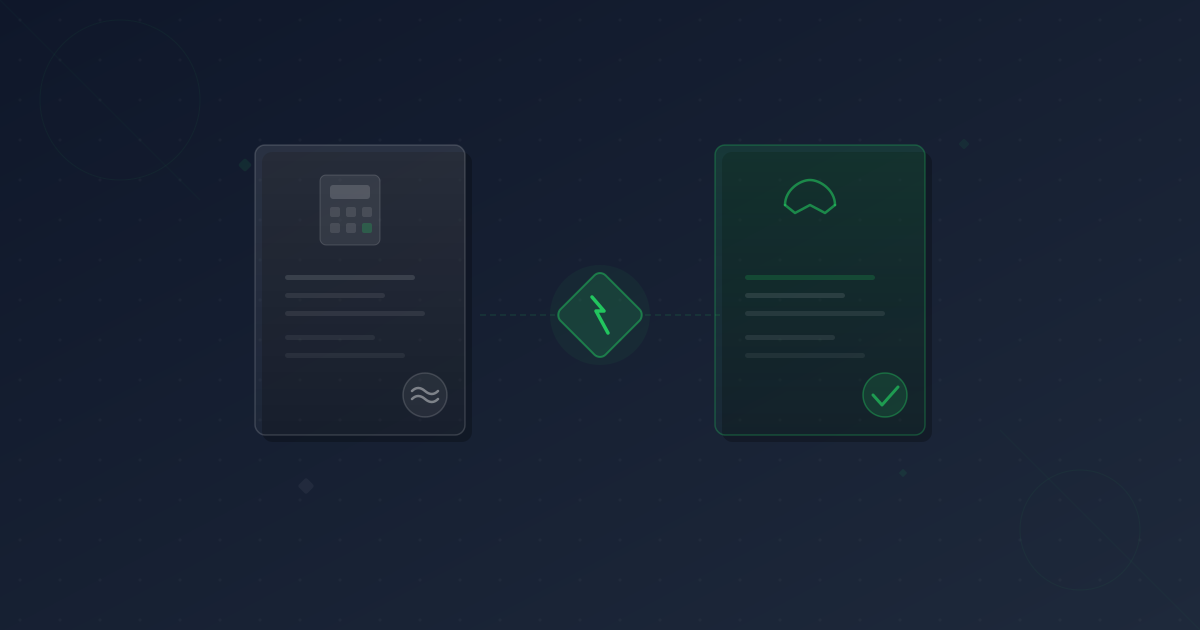
The Confusion That Costs Freelancers Money
Many freelancers use "estimate" and "proposal" interchangeably. This can be costly — because legally, they mean very different things:
- A proposal is binding — the price is fixed once accepted
- An estimate is an approximation — the final cost may vary
Sending the wrong document means either locking yourself into an unrealistic price or eroding client trust. This guide explains the differences and helps you choose the right one.
What Is a Proposal?
Definition
A proposal (also called a quote or offer) is a formal, binding document. You're telling the client: "I will deliver this scope at this price."
Legal Implications
- Once the client accepts, a contract is formed
- You're bound to the stated price
- The scope of work is fixed
- Changes require mutual agreement
- The client can hold you to the terms
What a Proposal Must Include
- Your business details — Name, address, tax ID
- Client details — Company name, contact person
- Date and reference number
- Scope of work — Exactly what you'll deliver
- Pricing — Line items and total (with tax breakdown)
- Tax information — VAT or exempt status
- Validity period — How long the offer stands
- Payment terms — When and how payment is due
When to Send a Proposal
You're a web designer and a client wants a landing page. The scope is clear: 1 page, responsive, CMS integration, 2 revision rounds. → Send a proposal with a fixed price.
What Is an Estimate?
Definition
An estimate (also called a cost estimate or ballpark) is an approximation of expected costs. You're telling the client: "Based on my assessment, it will cost approximately this much."
Legal Implications
- An estimate is generally not binding
- It's a guideline, not a commitment
- Significant overruns (typically 15-20%+) require you to inform the client
- The client may have the right to cancel if costs exceed the estimate substantially
- An estimate can be billable (if agreed upon)
What an Estimate Should Include
- Your business details — same as a proposal
- Client details — same as a proposal
- Date
- Clear label as "Estimate" — Important for legal clarity
- Description of expected work — What you anticipate delivering
- Estimated costs — With a note about possible variations
- Expected timeline
- Disclaimer — "The stated costs are estimates and may vary..."
When to Send an Estimate
A client wants to modernize their legacy web application. The scope is unclear — only after an audit will you know the real effort. → Send an estimate with an approximation.
Key Differences at a Glance
| Criteria | Proposal | Estimate | |----------|----------|----------| | Binding | Yes, legally binding | Non-binding approximation | | Price | Fixed price | Estimated costs | | Variance | Not allowed (without consent) | ~15-20% tolerance | | Contract | Formed on acceptance | No contract formed | | Free? | Yes (standard) | Can be billable | | Validity | Time-limited (e.g., 30 days) | No fixed validity | | Best for | Clear projects | Unclear projects |
Practical Tips: How to Decide
Send a Proposal When:
- ✅ The scope is clearly defined
- ✅ You can realistically estimate the effort
- ✅ The client expects a firm price commitment
- ✅ You're offering standardized services
- ✅ You want to actively win the project (proposals feel more committed)
Send an Estimate When:
- ✅ The scope is unclear or may change
- ✅ You need to investigate first before committing
- ✅ It involves repairs or maintenance (unknown issues)
- ✅ The project has many variables
- ✅ You want to protect yourself from price risk
The Pro Move: Combine Both
Many experienced freelancers use a two-step process:
- First, an estimate — After the initial conversation, as a rough guideline
- Then, a proposal — After detailed scoping, with a fixed price
This gives the client early orientation while you only commit once you truly understand the effort.
Common Mistakes to Avoid
Mistake 1: Calling It a "Proposal" When You Mean "Estimate"
If your document says "Proposal" at the top, it's legally treated as one — even if you intended it as an estimate. Use the correct label.
Mistake 2: No Validity Period
Without an expiration date, a proposal could theoretically remain valid indefinitely. Always set one — standard: 14-30 days.
Mistake 3: Vague Scope of Work
"Build a website" isn't enough. The more precisely you describe the scope, the better you're protected against scope creep and disputes.
Mistake 4: Missing Disclaimer on Estimates
Always explicitly state on estimates: "The stated costs are approximations and may vary based on the actual scope of work."
Create Both Quickly and Professionally
Whether you're sending a proposal or an estimate, the right software saves you time:
- Enter your briefing — Describe the project in a few sentences
- AI creates the document — With all required elements
- Customize — Adjust pricing, scope, and details
- Send — With e-signature and tracking
Conclusion
The difference between an estimate and a proposal is more than semantics — it has legal and financial consequences. Use the right document for the right situation:
- Clear project → Proposal (binding, professional, builds trust)
- Unclear project → Estimate (flexible, lower risk)
- Pro approach → Estimate first, then proposal after detailed scoping
Understanding and correctly using these two documents protects you from financial risk while projecting professionalism to your clients.
Related reading: The Complete Proposal Writing Guide · 5 Proposal Templates for Freelancers · Value-Based Pricing for Freelancers · 10 Proposal Mistakes to Avoid
Share
About the author
J
Julius
Julius is the founder of Proposal Air. As a former freelancer himself, he knows firsthand how much time proposals eat up — and is building the tool he always wished existed.
Create professional proposals in minutes
With Proposal Air, create stunning proposals — faster, more professional, and AI-powered.
No credit card required
Related Articles
Proposals & Quotes16 min
Proposal Strategy for Freelancers: The Complete Guide (2026)Everything freelancers need to know about proposals — from initial inquiry to winning the deal. The comprehensive guide linking to all specialist topics.
Julius
2/28/2026
Proposals & Quotes11 min
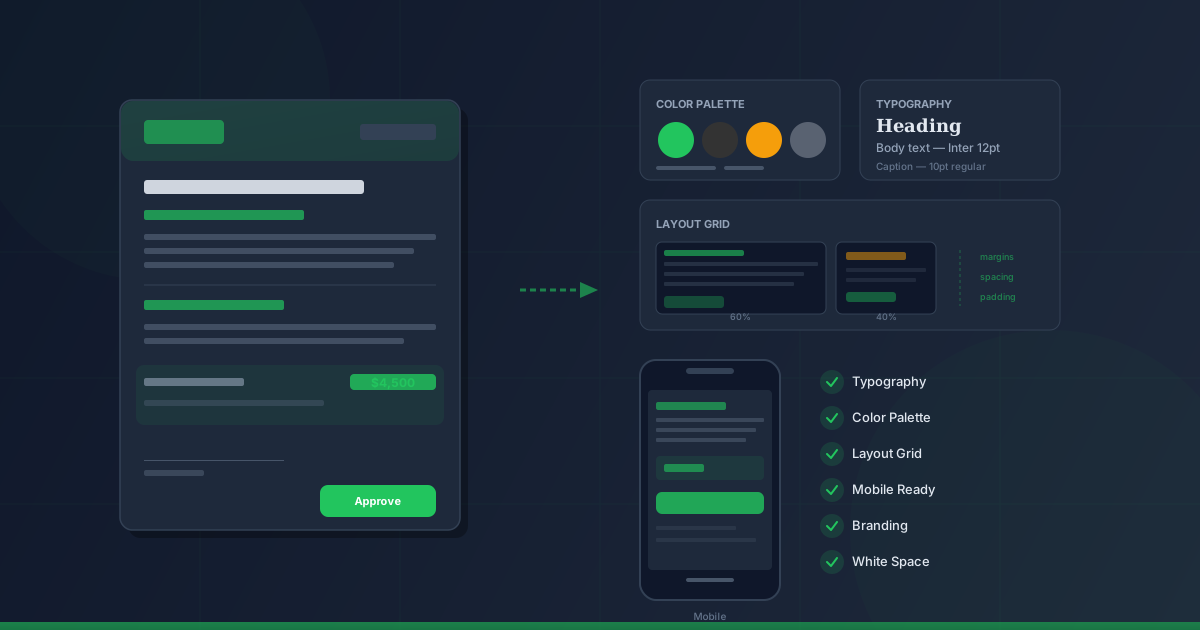
Professional Proposal Design: 9 Tips That Win ClientsLearn how to design proposals that win clients — from typography and color choices to layout and branding. Design tips that actually sell.
Julius
12/30/2025
Proposals & Quotes6 min
10 Proposal Mistakes Costing You Clients (and How to Fix Them)Why aren't your proposals getting accepted? Probably because of one of these 10 mistakes. With concrete examples and immediately actionable fixes.
Julius
12/27/2025