Proposals & Quotes
Freelance Proposal Templates: 5 Professional Samples You Can Use Today
Julius
|November 25, 2025|6 min read
Why a Great Template Makes All the Difference
A professional proposal can mean the difference between winning and losing a client. Yet many freelancers send uninspired emails with a price list or a Word document that looks like it's from 2005.
A well-designed template not only saves you time — it shows the client at first glance that you work professionally. In this article, you'll find 5 templates for different industries that you can customize and use immediately.
The Perfect Structure: What Every Proposal Needs
Before we get to the templates, here are the essential elements:
Required Elements
- Your details — Name, address, tax ID
- Client details — Company name, contact person, address
- Date and proposal number — For reference
- Validity period — Standard: 14-30 days
- Scope of work — What exactly are you delivering?
- Pricing — Line items, total price, tax breakdown
- Tax information — VAT or exempt status
- Payment terms — Due dates, payment methods
Differentiators (What Sets You Apart)
- Project summary — Shows you understood the client
- Timeline with milestones — Builds confidence
- Optional add-ons — Gives the client choices
- References — Social proof right in the proposal
- Next steps — Clear call-to-action
Template 1: Web Design & Development
This template works for website projects, from landing pages to full redesigns.
Structure
1. Cover page (project name + client details)
2. Briefing summary (3-5 sentences)
3. Service package:
   - Concept & wireframing
   - UI design (incl. X revision rounds)
   - Responsive development
   - CMS setup
   - Basic SEO optimization
   - Testing & browser compatibility
4. Optional add-ons:
   - Logo design (+$X)
   - Content creation (+$X)
   - Maintenance contract ($X/month)
5. Timeline (phases with calendar weeks)
6. Investment (tiered pricing: Basic / Professional / Premium)
7. Payment terms (30% upfront, remainder on delivery)
8. Validity period and signature
Tip: Offer three price tiers. The middle option is chosen most often (anchoring effect).
Template 2: Consulting & Coaching
For business consultants, coaches, and strategy advisors.
Structure
1. Executive Summary (challenge → solution → outcome)
2. Current situation (what you understood from the client)
3. Consulting approach:
   - Phase 1: Analysis & assessment (X days)
   - Phase 2: Strategy development (X days)
   - Phase 3: Implementation support (X days)
4. Deliverables:
   - Analysis report (X pages)
   - Strategy document
   - Action recommendations
   - X workshop sessions (2h each)
5. Investment (day rate or project fee)
6. Payment schedule (monthly or by milestone)
7. Next steps
Tip: For consulting, ROI matters. Frame your proposal so the client understands the value: "The process optimization is expected to save X hours/week."
Template 3: IT & Software Development
For app developers, backend specialists, and DevOps engineers.
Structure
1. Project overview (problem + technical solution)
2. Technical concept:
   - Architecture overview
   - Technology stack
   - API design / database schema
3. Functional scope:
   - Must-have features (MVP)
   - Nice-to-have features (Phase 2)
   - Explicitly excluded
4. Quality assurance:
   - Unit tests
   - Integration tests
   - Code review
   - Documentation
5. Infrastructure & deployment
6. Timeline (sprints / iterations)
7. Investment (fixed price or T&M with cap)
8. Maintenance & support (SLA options)
Tip: Clearly separate MVP from Phase 2. This reduces project risk and gives the client faster time-to-market.
Template 4: Marketing & Social Media
For social media managers, content creators, and marketing consultants.
Structure
1. Goals & KPIs (what should be achieved?)
2. Target audience analysis (who are we reaching?)
3. Strategy:
   - Channel selection (Instagram, LinkedIn, TikTok, etc.)
   - Content pillars (3-5 topic areas)
   - Posting frequency
4. Scope of work:
   - Content creation (X posts/month)
   - Community management
   - Monthly reporting
   - Ads management (optional)
5. Editorial calendar (sample for month 1)
6. Investment (monthly retainer)
7. Contract duration & notice period
Tip: Include a mini editorial calendar for the first month in your proposal. This makes your work tangible and sets you apart from competitors.
Template 5: Copywriting & Content
For copywriters, content writers, and content strategists.
Structure
1. Briefing summary
2. Content concept:
   - Tone of voice & style
   - Target audience & reader approach
   - SEO keywords (if relevant)
3. Scope of work:
   - X blog articles (approx. X words each)
   - X website pages
   - X social media posts
   - Revision rounds (X included)
4. Research & coordination:
   - Kick-off call (30 min)
   - Approval workflow
5. Timeline (delivery dates per piece)
6. Investment (per word or per piece)
7. Usage rights (exclusive / non-exclusive)
Tip: Define the number of revision rounds upfront. "2 revision rounds included, each additional $X" protects you from endless change requests.
How to Customize Templates for Your Business
1. Personalize Every Proposal
A template is a starting point, not a finished product. Customize at least these elements:
- Project name with the client's name
- Briefing summary in your own words
- Pricing based on the specific scope
- References relevant to the client's industry
2. Keep Your Branding Consistent
- Logo and colors on every page
- Consistent fonts and formatting
- Professional contact details in the footer
3. Make It Easy for the Client
- Digital signatures instead of "please print and fax"
- Clear next steps at the end of the proposal
- Contact information for questions
Create Proposals Even Faster
Even with a good template, creating a proposal often takes 30-60 minutes. With AI assistance, it takes under 5 minutes:
- Enter your briefing — Describe the project in a few sentences
- AI creates the proposal — Professionally formatted with all required elements
- Customize and send — Fine-tune with one click
- Use tracking — See when the client opens your proposal
Conclusion
A professional template is the first step to better proposals. But the real lever is personalization — show the client that you understand their problem and have the right solution.
Start with the template that best fits your industry, and customize it for each client individually.
Related reading: The Complete Proposal Writing Guide · Estimate vs. Proposal · 10 Proposal Mistakes to Avoid · Best Proposal Software Compared · Case Study: Web Designer Wins $45k Project
Share
About the author
J
Julius
Julius is the founder of Proposal Air. As a former freelancer himself, he knows firsthand how much time proposals eat up — and is building the tool he always wished existed.
Create professional proposals in minutes
With Proposal Air, create stunning proposals — faster, more professional, and AI-powered.
No credit card required
Related Articles
Proposals & Quotes3 min
How to Write a Freelance Proposal: The Complete Guide 2026Learn step by step how to write professional freelance proposals that win clients and boost your close rate.
Julius
11/18/2025
Proposals & Quotes16 min
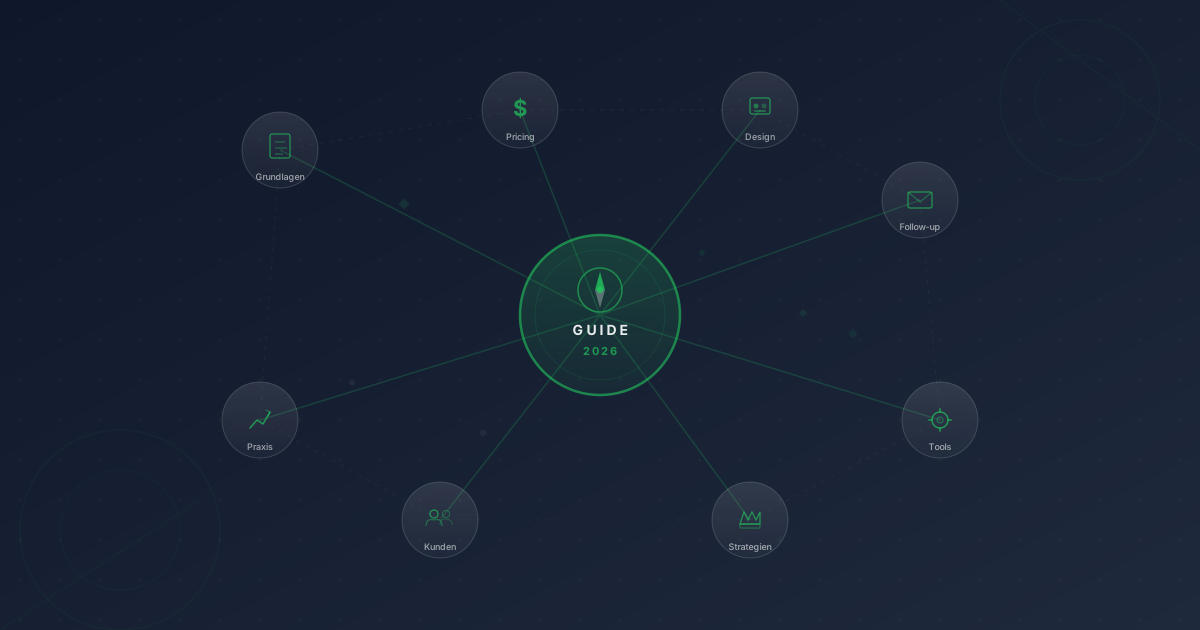
Proposal Strategy for Freelancers: The Complete Guide (2026)Everything freelancers need to know about proposals — from initial inquiry to winning the deal. The comprehensive guide linking to all specialist topics.
Julius
2/28/2026
Proposals & Quotes11 min
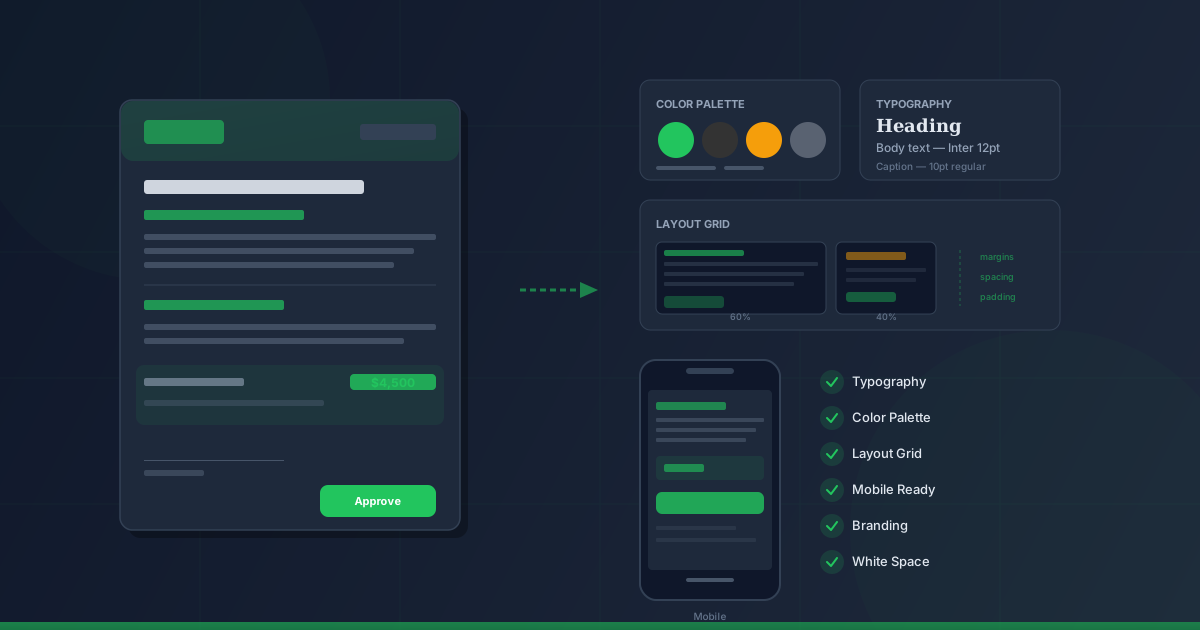
Professional Proposal Design: 9 Tips That Win ClientsLearn how to design proposals that win clients — from typography and color choices to layout and branding. Design tips that actually sell.
Julius
12/30/2025